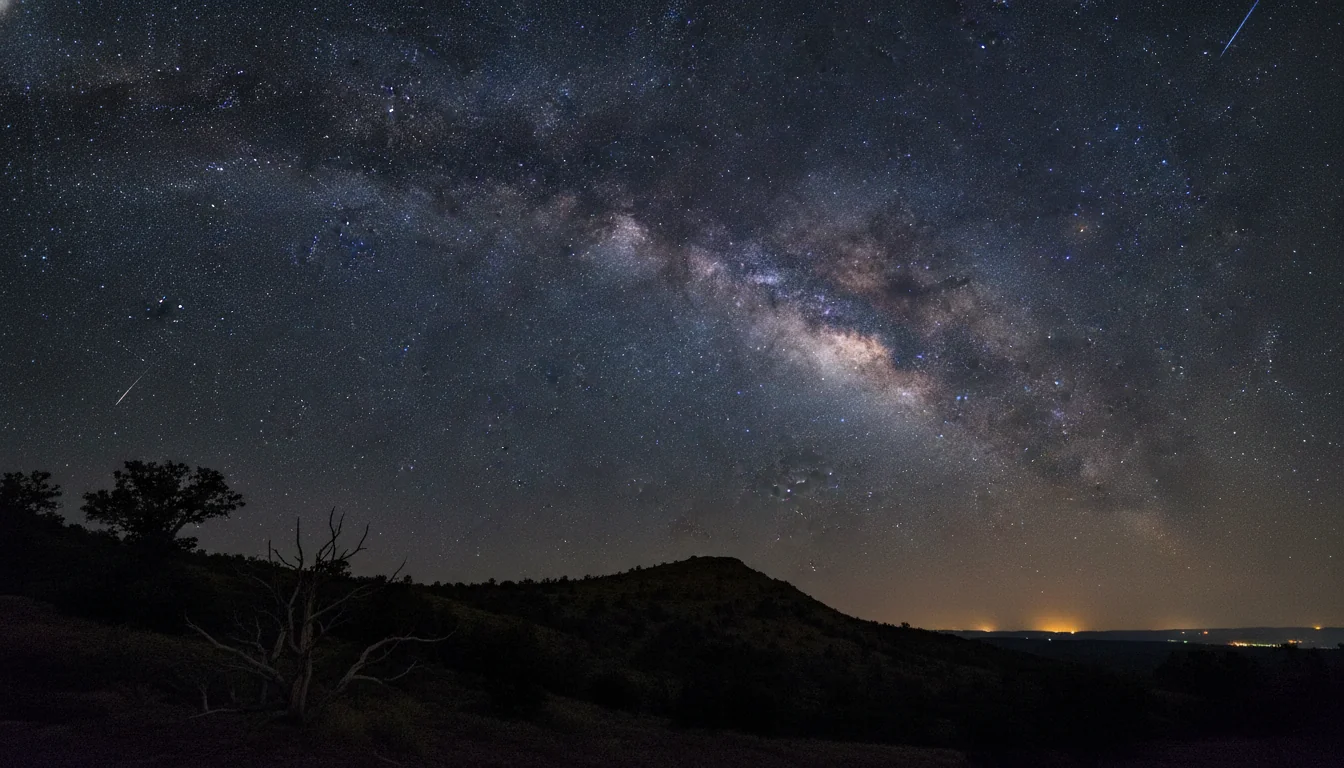
Direct answer: The Perseid meteor shower peaks on the evening of August 12 into the early morning of August 13, 2026, according to NASA's August 2026 skywatching guide. That same day brings a total solar eclipse and the New Moon in Leo, so moonlight will not wash out the meteors. August 14–16 also offer strong viewing under continuing dark-sky conditions. Look northeast toward the constellation Perseus after it is fully dark, stay out late when rates often improve, and no telescope is required.
This guide covers verifiable astronomy first—what the Perseids are, when to watch, and how to maximize your view—then optional wellness framing for readers who like to pair sky events with reflection. Meteors do not grant wishes; noticing one can still be a good moment to breathe and name what matters.
---
Why August 2026 Is an Exceptional Perseid Year
The Perseids are often called one of the year's best meteor showers. In 2026, they arrive with unusual timing advantages:
| Factor | What it means for viewing |
|---|---|
| Peak: Aug 12–13 | NASA/JPL lists the Perseids peaking the night of August 12 into early August 13 |
| New Moon: Aug 12 | The Moon is essentially absent from the night sky—no bright moonlight drowning faint meteors |
| Solar eclipse same day | The total solar eclipse on August 12 shares the calendar with the shower peak; daytime eclipse, dark-sky meteors that night |
| Extended dark window | Nights after the New Moon stay dark enough for strong post-peak rates; NASA also flags Aug 14–16 for bright evening Venus |
Most years, a waxing or full Moon near the Perseid peak cuts visible rates sharply. August 2026 avoids that problem. If you have ever waited an hour and seen three meteors while squinting past moon glare, this is the year to try again.
The August 2026 horoscope calendar places the Perseids inside the broader eclipse corridor—a busy sky month where astronomy and reflection naturally overlap. You do not need astrology to enjoy the meteors; the timing just makes both easier.
---
What the Perseids Actually Are (NASA-Verified)
Meteor showers happen when Earth passes through a debris trail left by a comet. The Perseids come from Comet Swift-Tuttle, which leaves behind tiny particles—mostly dust and sand-grain-sized bits—that strike Earth's atmosphere at high speed and burn up as bright streaks of light.
NASA describes this in plain terms: as those particles hit the atmosphere, they become the "shooting stars" we see from the ground. The shower is annual because Earth crosses the same debris stream each August.
Key facts:
- Parent body: Comet Swift-Tuttle
- Radiant constellation: Perseus (northeast sky)
- Typical peak activity: One night near mid-August; 2026 peak is Aug 12–13 per NASA
- Equipment needed: None—naked-eye viewing is best
- Telescope: Not recommended; meteors flash across too much sky too quickly
This is astronomy, not folklore. The Perseids are predictable because orbital mechanics are predictable. What you cannot predict is cloud cover, local light pollution, or whether your neighbor's security floodlight resets your night vision every six minutes.
---
When to Watch: Peak Night and Best Backup Nights
Primary peak: August 12–13, 2026
NASA's What's Up for August 2026 states the Perseids peak the evening of August 12 into the early morning hours of August 13, under dark skies thanks to the New Moon arriving the same day.
Practical timing notes:
- Evening twilight: You may catch early earthgrazers—long, slow meteors skimming the horizon—once the sky is fully dark.
- After midnight: Rates often climb as the radiant (in Perseus) rises higher in the sky.
- Pre-dawn hours: Frequently the richest window for patient watchers at dark sites.
If you are also observing the solar eclipse on August 12, remember: eclipse viewing requires certified eclipse glasses during partial phases. Meteor viewing that night requires dark adaptation and no bright phone screens. Same day, different safety rules.
Backup nights after the peak
The Perseids remain active for roughly weeks around the peak, with gradually declining rates. NASA highlights the Aug 12–13 peak; the nights that follow still work because the Moon is a thin waxing crescent after the New Moon.
August 14–16 is a practical second-chance window for meteors, and NASA’s August skywatching guide separately calls out those dates for Venus at greatest eastern elongation—a bright evening-star target low in the west after sunset. You can watch Venus at dusk, then settle in later for leftover Perseids under still-dark skies.
1. The New Moon on August 12 keeps moonlight low for several nights after peak. 2. If clouds cover August 12–13, you still get workable dark-sky conditions without waiting until next year. 3. Post-peak nights can feel calmer—fewer crowds at popular dark-sky spots.
Treat August 12–13 as the headline and the following nights as a quieter encore, not a second official peak.
Peak-night pacing: If you are also watching the solar eclipse earlier on August 12, use certified eclipse glasses for partial phases—never regular sunglasses. After sunset, allow twilight to fade, set up facing northeast, and plan at least 45–60 minutes outside. Rates often improve after midnight as Perseus climbs higher.
---
How the Leo Solar Eclipse and New Moon Help Viewing
On August 12, the New Moon aligns with a total solar eclipse in Leo. Astronomically, that means the Moon is between Earth and the Sun, with its sunlit side facing away from us. Nighttime moonlight is essentially absent.
That matters for meteor watching because moonlight is sky pollution. Even a quarter Moon can erase many faint Perseids from view. A moonless mid-August is the difference between counting a dozen meteors per hour and counting three while wondering if you are doing something wrong.
The eclipse itself does not "cause" better meteors. The shared timing does: peak shower + new moon + dark nights immediately after. If you spent August 12 reflecting on creative courage with a Leo solar eclipse ritual, stepping outside afterward for twenty minutes of meteor watching is a low-effort way to mark the day without turning the sky into a spiritual test.
Connection, not causation: darkness helps your eyes; it does not guarantee wishes.
---
Where to Look: The Perseus Radiant Explained
Meteor showers are named for their radiant—the point in the sky from which meteors appear to originate. For the Perseids, that point lies in the constellation Perseus, which rises in the northeast during mid-August evenings.
NASA's guidance:
Look toward the northeast once it's fully dark and watch for the constellation Perseus to clear the horizon. This is where the meteors originate, but let your eyes wander, because they can flash across any part of the sky.
What that means in practice:
- Do not stare at one fixed star like a laser pointer target.
- Orient northeast so Perseus is in your general field of view.
- Use peripheral vision—meteors often catch the edge of your sight first.
- Lie back with as much sky visible as possible; a reclining chair or blanket helps.
Perseus climbs higher after midnight for mid-northern latitudes, which is one reason late-night watching often rewards patience. Southern Hemisphere viewers can still see Perseids, but the radiant stays lower and rates may be reduced compared to northern locations.
---
Viewing Tips: Dark Sky, Late Hours, No Telescope
Dark site: Light pollution is the biggest variable you control. Drive away from city centers if safe—even twenty minutes helps.
Dark adaptation: Give your eyes 20–30 minutes. Avoid white phone screens; use red-light mode if you need a star map.
Stay out late: NASA recommends staying out as stars climb higher. Prioritize after midnight on peak night if you can.
Comfort: Dress in layers, bring water, and use a reclining chair or blanket. August nights cool faster than afternoon eclipse weather suggests.
No telescope: Meteors flash across the entire sky for seconds. Binoculars and telescopes narrow your view; naked eye wins.
Realistic rates: Published counts assume ideal dark-sky conditions. Suburban backyards yield fewer meteors; dark sites yield more. Both are normal.
For full August sky context, see NASA's August 2026 What's Up article and our August 2026 horoscope calendar.
---
Optional Wellness Framing (Without Claiming Meteors Grant Wishes)
People have linked "shooting stars" and wishes for centuries. Scientifically, a meteor is a particle vaporizing in the upper atmosphere. It does not read your thoughts or grant requests.
If that framing still resonates emotionally, treat it lightly:
- When you see a meteor, name one hope you are carrying—not as a command to the universe, but as a moment of honesty under a wide sky.
- Use the shower as a pause from August's eclipse intensity: no altar required, just breathing and looking up.
- Pair with one journal line afterward: "Tonight I noticed ___."
This sits alongside astronomy, not instead of it. For a similar event-led approach with other showers, see our October 2025 meteor guide—different comet, same principle: dark sky, patience, realistic expectations.
If you want lunar timing woven into practice without overclaiming, the understanding moon phases guide explains why New Moon nights stay darkest.
NASA also notes Venus at greatest eastern elongation August 14–16 and a partial lunar eclipse August 27–28—more August skywatching without specialized gear.
---
Track New Moon darkness, eclipse dates, and monthly sky highlights for your location with Lunar Guide—so you know when to plan dark-sky nights without guessing.