Stress is the body's response to any demand that exceeds its perceived capacity to cope. That's the clinical definition. The lived experience is more specific: the racing heart before a difficult conversation, the shallow breathing and shoulder tension that accumulate over a difficult week, the inability to think clearly when everything feels like too much at once.
Understanding stress at more than a surface level is worth the time, because most stress management advice treats the symptoms without addressing the underlying mechanics. Once you understand what the stress response actually is and why it does what it does, managing it becomes far more intuitive.
---
The Biology of Stress: Why Your Body Does What It Does
The stress response is, at its core, a survival mechanism. When your brain perceives a threat — whether a physical danger or an emotional one — it triggers a cascade through the hypothalamic-pituitary-adrenal (HPA) axis and the sympathetic nervous system. The result is the release of adrenaline (epinephrine) and cortisol.
Adrenaline acts fast. Within seconds, it increases heart rate, redirects blood flow to large muscles, dilates pupils, and suspends non-essential functions like digestion and the immune response. Your body is doing exactly what it should do if you need to run from a predator or lift a car off someone.
Cortisol follows more slowly, flooding the system to maintain heightened alertness, keep blood sugar available for energy, and suppress inflammation. It also amplifies the brain's focus on threat-relevant information — which is why, under stress, you notice risks more clearly than opportunities.
This system is exquisitely well-designed for acute threats. The animal is threatened, responds, and the stress hormones metabolize as the physical response burns them through action. The problem is that modern stressors — a difficult boss, financial uncertainty, relationship conflict, a relentless news cycle — are not resolved through running or fighting. They persist. And the stress response system, built for sprint-and-recovery, gets locked into a chronic low-level activation it was never designed to sustain.
---
Acute Stress vs. Chronic Stress
Acute stress is short-duration stress with a clear trigger and a clear end. It's not inherently harmful — in fact, research on what researchers call "hormetic stress" shows that acute, manageable stress challenges strengthen biological systems much the way exercise does. The body is stressed, adapts, and comes out more resilient. Deadlines, performance demands, brief conflicts, and physical exercise all generate acute stress.
Chronic stress is the sustained activation of the stress response without adequate recovery. It develops when stressors are persistent, unpredictable, or felt to be outside your control. The physiological effects of chronic stress read like a summary of modern health problems: elevated blood pressure, impaired immune function, digestive disruption, disrupted sleep architecture, increased systemic inflammation, shrinkage of the hippocampus (the brain region involved in memory and learning), and — as mentioned in the research on telomeres — accelerated cellular aging.
The distinction matters for how you respond. Not all stress is a problem to be eliminated.
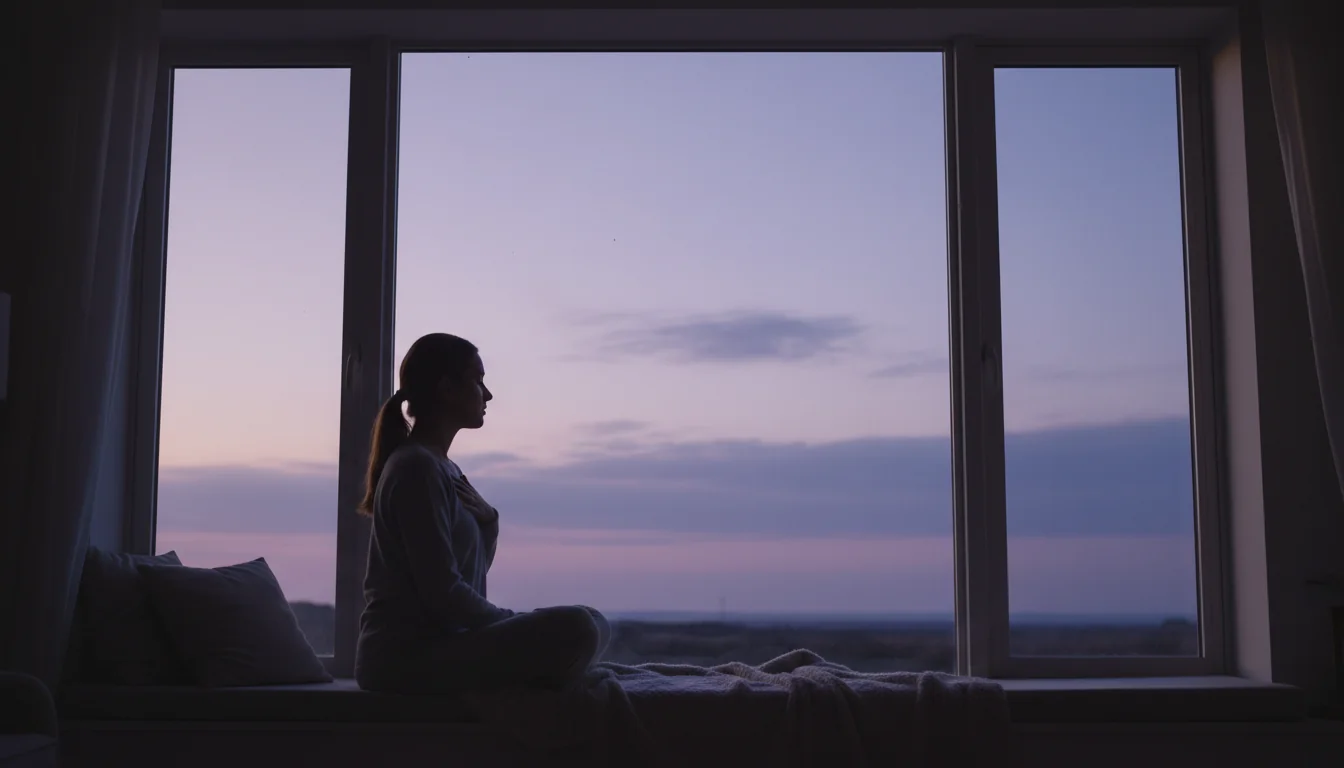
!Calm moment by a window — breathing, downshifting the nervous system after stress.
---
The Different Types of Stress
Eustress is positive stress — the kind that accompanies excitement, challenge, growth, and purpose. A new project, a physical challenge, a performance, a meaningful stretch goal. Eustress is associated with motivation and vitality. The goal is not a life without this kind of stress.
Distress is negative stress that exceeds your coping capacity and feels unmanageable or aversive. This is what people usually mean when they say "I'm stressed."
Episodic acute stress describes people who live in a pattern of repeated acute stress — always rushing, always in crisis, always overloaded. Unlike genuine acute stress (which resolves), episodic stress creates a lifestyle pattern that mimics chronic stress biologically.
Traumatic stress results from events that overwhelm the stress response system entirely — accidents, violence, sudden loss, or other experiences that are too much, too fast, too soon to be processed normally. Traumatic stress often requires specialized support to resolve.
---
How Stress Shows Up in Your Body, Mind, and Behavior
One of the reasons chronic stress is underdiagnosed is that its symptoms are so common they normalize quickly.
Physical signs of chronic stress:
- Tension headaches or jaw clenching
- Tight shoulders, neck, or upper back
- Disrupted digestion — IBS flares, nausea, appetite changes
- Sleep difficulty — particularly early waking between 2 and 4 a.m. (a cortisol-related pattern)
- Frequent illness (immune suppression)
- Fatigue that isn't resolved by sleep
- Heart palpitations or racing pulse at rest
Mental and emotional signs:
- Difficulty concentrating or completing tasks
- Racing thoughts, particularly in the evening
- Irritability or emotional reactivity that feels disproportionate
- Difficulty accessing pleasure or motivation
- Persistent low-grade anxiety or dread
- Catastrophizing — the tendency to assume worst-case outcomes
Behavioral signs:
- Reaching for food, alcohol, screens, or other numbing behaviors
- Withdrawal from social connection
- Neglecting basic self-care
- Increased procrastination as the prefrontal cortex becomes less available
- Difficulty being present in conversations or relationships
When you see several of these together and they've been present for more than a few weeks, you're likely dealing with chronic stress rather than a temporary overwhelm.
---
Evidence-Based Stress Management Techniques
The Physiological Sigh
Research from the Huberman Lab at Stanford identified the physiological sigh as the fastest known method for down-regulating the acute stress response. The technique: inhale fully through the nose, then take a second short inhale to fully inflate the lungs, followed by a long, slow exhale through the mouth. This pattern deflates the lung sacs (alveoli) that have collapsed under shallow stress-breathing and rapidly returns the heart rate toward baseline. Two to three repetitions are usually sufficient.
Movement
Physical exercise is one of the most evidence-supported stress management tools available. It metabolizes the stress hormones that the body has released — completing the biological cycle that chronic stress interrupts. Vigorous movement (running, cycling, rowing) works most effectively for this purpose. Even a twenty-minute walk is associated with significant reductions in cortisol and anxiety ratings.
Sleep
Chronic stress impairs sleep, and sleep deprivation worsens stress reactivity — a feedback loop that can accelerate quickly. Protecting sleep (consistent timing, dark and cool room, no screens in the ninety minutes before bed) is not a luxury during stressful periods; it's the most important lever you have for maintaining the biological capacity to handle stress.
Social Connection
Genuine social connection activates the parasympathetic nervous system and suppresses the stress response. Research by Julianne Holt-Lunstad has shown that social isolation is as significant a mortality risk as smoking fifteen cigarettes per day. A ten-minute conversation with someone you trust has measurable physiological effects.
Cold Exposure
Brief cold exposure — a cold shower, cold water on the face — triggers the dive reflex and forces a rapid drop in heart rate, providing a fast physiological reset during acute stress. It also increases norepinephrine, which improves mood and focus.
---
How Spiritual Practice Reduces Stress
A growing body of research supports the physiological effects of practices traditionally understood as spiritual: meditation reduces cortisol and inflammatory markers; nature exposure lowers blood pressure and reduces amygdala activation; ritual behaviors reduce anxiety by creating predictability and a sense of control.
Meditation — particularly mindfulness-based approaches — directly trains the prefrontal cortex's capacity to regulate the amygdala, reducing baseline stress reactivity over time. Eight weeks of consistent practice is the threshold most studies use to observe measurable brain changes.
Grounding rituals — lighting a candle, brewing tea slowly, spending time outside without a purpose — activate the same parasympathetic circuitry as formal meditation. The specificity of the ritual matters less than the consistency and presence it requires.
---
When to Seek Professional Support
If stress has been significantly disrupting your sleep, work, relationships, or physical health for more than a few weeks — or if it has progressed to what feels like anxiety or depression — working with a professional is the most efficient path forward. Cognitive-behavioral therapy (CBT) has the strongest evidence base for stress-related conditions. Somatic approaches address the body's contribution directly.
The physiological sigh, daily movement, and adequate sleep will take you a long way. They are not always sufficient.
---
Stress is not a character flaw or a weakness. It is a biological system responding to perceived demand. Understanding it precisely — rather than just feeling overwhelmed by it — gives you the capacity to work with it rather than against it.
The body is not your enemy when it's stressed. It's trying to help you. Your job is to give it the information that the threat has passed.
This article is general information, not medical advice, and does not replace care from a qualified healthcare professional. If stress is affecting your health, sleep, or safety, speak with a licensed clinician.