What Is the Spiritual Meaning of Winter Solstice 2025?
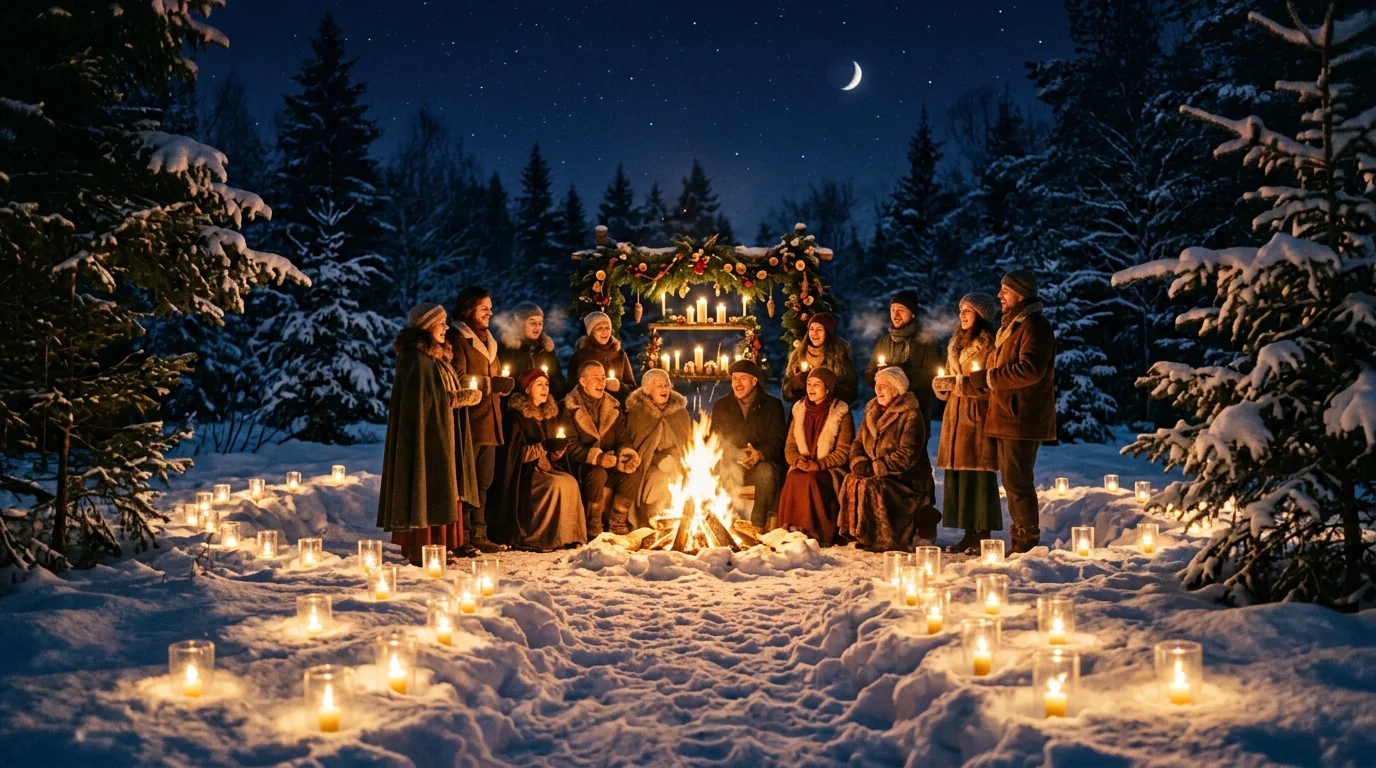
Direct answer: Winter Solstice 2025 is a seasonal threshold for rest, reflection, and renewal. In the Northern Hemisphere, December 21 marks the shortest day and longest night of the year, making it a meaningful time to honor darkness, release what has completed, and welcome the gradual return of light.
The Winter Solstice of 2025 falls on December 21st, marking the longest night and shortest day of the year in the Northern Hemisphere. This astronomical event has been celebrated by cultures worldwide for millennia as a profound turning point—the moment when darkness reaches its peak and light begins its slow return.
The 2025 Winter Solstice carries special significance as we stand at the threshold between years, making it a potent time for reflection, release, and setting intentions for the approaching new year. Understanding and honoring this cosmic moment can deepen your spiritual practice and align you with nature's most powerful cycles.
If you want to carry solstice insights forward, continue the practice with New Year's Eve 2025 manifestation rituals or a quiet New Year's meditation practice for 2026.
What Happens Astronomically at the Winter Solstice?
The Astronomy Behind the Solstice
The Winter Solstice occurs when Earth's axial tilt reaches its maximum distance from the Sun. In the Northern Hemisphere, this means the North Pole is tilted 23.5 degrees away from the Sun, resulting in the shortest period of daylight and longest night of the year.
On December 21, 2025, many Northern Hemisphere locations experience their shortest daylight span of the year, though exact sunrise and sunset details vary by latitude and time zone. After this point, daylight gradually lengthens as we journey toward the Summer Solstice six months later.
The Spiritual Significance
Across cultures and throughout history, the Winter Solstice has been recognized as a sacred time:
Death and Rebirth: The solstice represents the symbolic death of the old year and the rebirth of the Sun. Many ancient peoples feared the Sun might not return and performed rituals to encourage its revival.
Inner Journey: The long darkness invites us inward, encouraging reflection, rest, and connection with our deepest selves. This is nature's time for going within.
Hope and Promise: Even in the darkest moment, we know light is returning. The solstice reminds us that after every dark period, renewal comes.
Transition and Transformation: As a threshold between darkness and growing light, the solstice is ideal for releasing what no longer serves and planting seeds for what's to come.
Which Ancient Traditions Honor the Winter Solstice?
Yule: The Norse and Germanic Celebration
Yule was celebrated by ancient Norse and Germanic peoples with great feasting, the burning of the Yule log, and honoring the Wild Hunt led by Odin. The Yule log, burned throughout the twelve nights between solstice and the new year, symbolized the return of light and warmth.
Modern practitioners continue these traditions by burning Yule logs, decorating with evergreen boughs (symbolizing eternal life), and celebrating with feasts of seasonal foods.
Saturnalia: Roman Revelry
The Romans celebrated Saturnalia, a week-long festival honoring Saturn, god of agriculture and time. During Saturnalia, social norms were reversed, gifts were exchanged, and candles were lit to symbolize the sought-after light.
Many Saturnalia traditions were later incorporated into Christmas celebrations, including gift-giving and feasting.
Dongzhi Festival: Chinese Winter Solstice
In Chinese tradition, the Dongzhi Festival celebrates the return of positive yang energy as days begin to lengthen. Families gather to eat tangyuan (glutinous rice balls), symbolizing reunion and completeness. This is considered a time for family gathering and counting one's blessings.
Inti Raymi: Incan Sun Celebration
The Incas celebrated Inti Raymi to honor Inti, the Sun god. While their Winter Solstice falls in June (Southern Hemisphere), the significance is the same: honoring the Sun at its weakest point and calling for its return.
Indigenous Traditions Worldwide
Many Indigenous peoples around the world mark the Winter Solstice with ceremonies of gratitude, renewal, and connection to ancestors. From the Hopi Soyal ceremony to Celtic Druid rituals at Stonehenge, the solstice has been recognized as a time of sacred power.
How Should You Prepare for Winter Solstice 2025?
Physical Preparation
Clean and Clear: As you approach the solstice, clean your home thoroughly. This physical clearing creates space for fresh energy and symbolizes releasing the old year.
Decorate with Nature: Bring the outside in with evergreen branches, pine cones, holly, and other natural decorations that symbolize enduring life through winter.
Create an Altar: Set up a solstice altar with candles (representing the returning light), seasonal items, crystals like clear quartz or citrine, and personal meaningful objects.
Prepare Seasonal Foods: Plan a solstice feast featuring warming, seasonal ingredients. Root vegetables, nuts, spiced drinks, and hearty stews honor the earth's abundance even in winter.
Spiritual Preparation
Slow Down: In the days leading to the solstice, intentionally reduce your pace. The natural world is resting, and you're invited to do the same.
Reflect on the Year: Journal about 2025—its challenges, gifts, lessons, and growth. What are you ready to release? What do you want to carry forward?
Set Your Intentions: Begin contemplating what you want to nurture as light returns. What seeds will you plant in this dark, fertile time?
Connect with Nature: Spend time outdoors observing winter's quiet beauty. Notice how nature conserves energy, rests, and prepares for eventual renewal.
What Winter Solstice Rituals Can You Try in 2025?
The Candle Vigil: Welcoming the Returning Light
This ritual honors the moment when light begins its return.
What You'll Need:
- 13 candles (12 for the past months, 1 for the rebirth of light)
- Fireproof surface or candle holders
- Journal and pen
- Quiet, contemplative music
The Ritual
Beginning at Sunset on December 21:
1. Create a sacred space and arrange your 12 candles in a circle, with the 13th in the center.
2. Light each of the 12 candles one by one, naming a blessing or lesson from each month of 2025. Take time with each, truly remembering what that month brought.
3. Once all 12 are lit, sit with the light and reflect on the year as a whole. What story do these 12 months tell?
4. At midnight (or when you feel ready), speak aloud your gratitude for 2025 and your intentions for 2026.
5. Light the central candle from the flames of all 12, symbolizing the unified light of your experience being reborn.
6. Let this central candle burn as long as safely possible—through the night if you can stay awake, or at least until you sleep.
7. In the morning, observe the sunrise (if weather permits) and greet the returning light.
The Yule Log Ceremony
What You'll Need:
- A log (oak or ash are traditional)
- Decorations: holly, evergreen, ribbons
- A piece of last year's Yule log (if you have one)
- Fireplace or fire pit
- Wishes written on small papers
The Ritual
1. Decorate your Yule log with natural materials while setting intentions for the coming year.
2. Drill holes in the log and insert your written wishes, or tie them on with natural string.
3. If you saved a piece of last year's log, use it to light this year's, connecting the cycles.
4. As the log burns, meditate on the transformation of what was into what will be.
5. Keep a small piece of this log to light next year's, maintaining the continuity.
6. Traditionally, the Yule log should burn for 12 hours (representing the 12 months ahead), though adapt to your circumstances.
Dark Night Meditation
This solitary ritual harnesses the power of the longest night for deep inner journey.
What You'll Need:
- Completely dark space
- Comfortable sitting or lying position
- Blankets for warmth
- Journal for afterward
The Ritual
1. Begin after dark on December 21st. Create complete darkness—no light sources.
2. Lie or sit comfortably and simply be with the darkness. Notice what arises when you cannot escape into visual distraction.
3. Allow yourself to feel any fear, discomfort, or resistance. Breathe through it.
4. As you settle, visualize yourself as a seed deep in the dark earth. Feel the rich potential in this darkness. Know that you're gestating, preparing for future growth.
5. Ask the darkness: "What do I need to know? What wants to be born through me?"
6. Remain in meditation for as long as feels right—perhaps the full night if you're called to vigil.
7. Journal immediately upon emerging, capturing whatever arose in the darkness.
The Solstice Feast
Food and community are central to solstice celebration.
Preparations
- Invite loved ones who appreciate the sacred
- Prepare seasonal foods with intention
- Set a beautiful table with candles and natural decorations
- Plan a moment of ceremony during the meal
The Ceremony
1. Before eating, have each person share one gratitude from the year and one hope for the year ahead.
2. Light candles together, each person lighting one from a central flame.
3. Toast to the returning light and to each other.
4. Share food and stories, letting the warmth of community mirror the warmth of the returning sun.
5. End with a song, poem, or moment of silence honoring the solstice.
Nature Walk at Dawn or Dusk
The Practice
1. On the solstice, take a mindful walk at either sunrise or sunset—the thresholds of the day.
2. Walk slowly and silently, observing winter nature with fresh eyes.
3. Find a spot to sit in stillness, even if just for a few minutes.
4. Notice how nature handles winter: rest, conservation, quiet waiting.
5. Ask yourself: What is nature teaching me right now?
6. Collect a small natural item (a stone, a fallen leaf) to place on your altar as a reminder.
Which Crystals Are Used for Winter Solstice Rituals?
Certain crystals resonate particularly with solstice energy:
Clear Quartz: Amplifies intentions and represents the purity of returning light.
Citrine: Carries solar energy, warming you through winter and attracting abundance.
Garnet: A deep red stone that supports survival energy and passion through dark times.
Snowflake Obsidian: Honors the beauty of winter while supporting shadow work.
Bloodstone: Provides courage and strength during challenging seasons.
Labradorite: Enhances intuition during this naturally introspective time.
Which Herbs and Plants Symbolize the Winter Solstice?
Evergreens (Pine, Fir, Cedar): Represent eternal life and hope through winter.
Holly: With its red berries and green leaves, symbolizes life's persistence.
Mistletoe: A sacred plant to Druids, associated with healing and protection.
Frankincense and Myrrh: Traditional ceremonial resins for purification and sacred space.
Cinnamon: Warming spice that invokes prosperity and protection.
Orange and Clove: Traditional winter scents that uplift spirits.
What Should You Journal About on Winter Solstice?
Use these prompts to deepen your solstice reflection:
1. What has 2025 taught me about myself?
2. What am I ready to release as the year ends?
3. What do I want to nurture as light returns?
4. How have I grown through this year's challenges?
5. What am I most grateful for from this year?
6. Who do I want to become in 2026?
7. What dreams are ready to be born?
8. How can I honor both darkness and light in my life?
9. What wisdom do I carry from my ancestors about this season?
10. How do I want to feel as the new year begins?
How Can You Practice Winter Solstice Self-Care?
Winter Solstice calls for nurturing the self:
Rest Deeply: Honor the season of rest. Sleep longer, nap freely, move slowly.
Warm from Within: Drink warming teas, take hot baths, eat nourishing soups.
Create Coziness: Make your home a hygge haven with blankets, candles, and comfort.
Limit Screens: The artificial light of devices disrupts natural winter rhythms. Reduce usage, especially in evening.
Connect with Loved Ones: While honoring solitude, also nourish meaningful relationships.
Create: The long nights are perfect for crafts, cooking, writing, or any creative expression.
What Should You Do After the Winter Solstice?
The Return of Light
After December 21, notice the gradual lengthening of days. Though subtle at first, this growing light carries real energy. You might:
- Track sunrise and sunset times
- Spend a few minutes in morning light each day
- Journal about any shifts you notice in your energy or mood
- Continue nurturing the seeds planted at solstice
The Twelve Days
In many traditions, the twelve days between Winter Solstice and January 1st are considered a sacred period out of ordinary time. Some practices:
- Set one intention for each day
- Draw a tarot or oracle card daily
- Keep a detailed dream journal
- Practice extra self-care and reflection
- Prepare for New Year's Eve rituals
How Does Solstice Energy Connect to New Year's Intentions?
The Winter Solstice naturally flows into New Year's Eve, creating a powerful period for transformation. Use the solstice to:
1. Release: Let go of what doesn't serve you 2. Rest: Honor the need for winter stillness 3. Reflect: Review and learn from the year 4. Vision: Begin seeing what you want to create 5. Plant: Set intentions as seeds in dark, fertile ground
Then, at New Year's Eve, these seeds receive the collective energy of new beginning, strengthening your manifestation.
Conclusion
Winter Solstice 2025 offers a profound opportunity to align with nature's deepest wisdom. In embracing the darkness, we find the promise of returning light. In honoring rest, we store energy for future growth. In reflecting on what was, we create space for what will be.
However you choose to celebrate—whether through elaborate ritual or simple candlelight—know that you're participating in humanity's oldest and most universal celebration. You stand with countless ancestors and people around the world who recognize this moment as sacred.
May your solstice be blessed with peace, reflection, and the certain knowledge that light always returns.
Ready to deepen your spiritual practice year-round? Connect with Lunar Guide's AI-powered guidance for personalized support through every season and cycle.