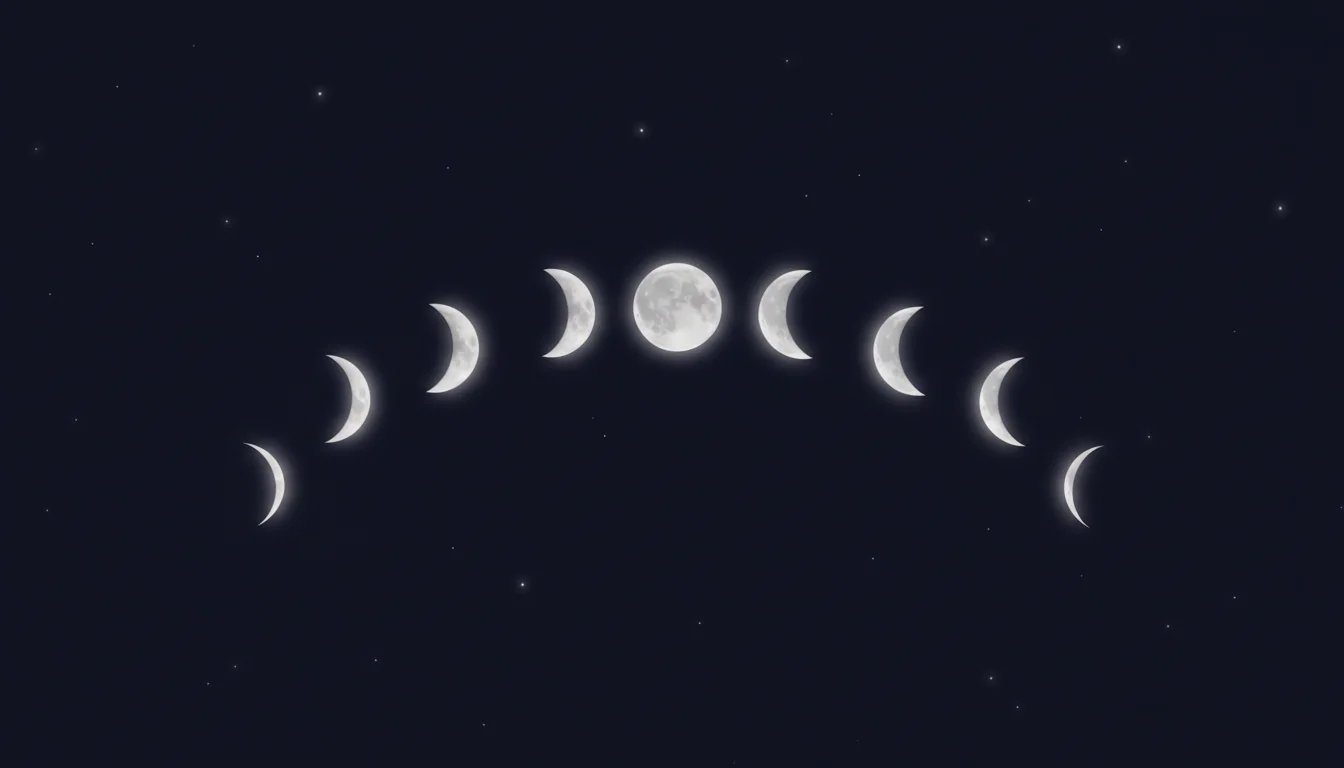
The moon has 8 phases: new moon, waxing crescent, first quarter, waxing gibbous, full moon, waning gibbous, third quarter, and waning crescent. Together they complete one lunar cycle of approximately 29.5 days, each phase carrying distinct energy for intention-setting, action, and release. Understanding what each phase means — both in the sky and in your life — is one of the most practical tools in any wellness or spiritual practice.
---
Why Moon Phases Matter Beyond Astronomy
The moon governs Earth's tides through gravitational pull. The human body, composed of roughly 60% water, is not immune to this influence. Research has linked lunar phases to sleep pattern disruptions, mood fluctuations, fertility cycles, and even surgical outcomes — and while the science is still developing, the anecdotal record spanning every culture in human history is hard to dismiss.
Every tradition that tracked the sky — Babylonian, Egyptian, Celtic, Chinese, Indigenous American, Vedic — used the lunar cycle as a practical calendar for agriculture, ritual, healing, and social life. The phases of the moon were not mystical decoration. They were the most reliable time-keeping system available, and they worked.
!Eight moon phases in sequence across a deep indigo night sky with soft silver light.
---
All 8 Moon Phases Explained
1. New Moon
What's happening astronomically: The Moon is between Earth and the Sun. Its illuminated face points away from us, making it invisible.
Energy and meaning: Beginnings, potential, stillness, intention. The new moon is a threshold — the fertile void before creation. This is the time to plant seeds (literal or metaphorical), set intentions, and begin new projects or habits. Emotionally, many people feel introspective and low-energy here. Honor it. Rest is productive during a new moon.
Ritual suggestion: Write 1–3 intentions for the coming cycle. Keep them honest and directional rather than rigid.
---
2. Waxing Crescent
What's happening astronomically: A sliver of the Moon becomes visible in the western sky just after sunset. Illumination is less than 50% and growing.
Energy and meaning: Hope, momentum, early effort. The waxing crescent is the seedling pushing through soil — tender, directional, gaining strength. This is the time to take first steps on your new moon intentions. Enthusiasm is available here; use it while it's fresh.
Ritual suggestion: Review your new moon intentions and take one small concrete action toward each one.
---
3. First Quarter
What's happening astronomically: Half the Moon is illuminated. It rises around noon and sets around midnight.
Energy and meaning: Decision, action, commitment. The first quarter often brings a challenge or a choice — something that tests whether you actually mean what you said at the new moon. This is a time for decisive action, not overthinking. Show up for what you started.
Ritual suggestion: Identify the biggest obstacle to your intention and take one direct action to address it.
---
4. Waxing Gibbous
What's happening astronomically: More than half the Moon is illuminated but not yet full. It rises in the afternoon and sets in the early morning hours.
Energy and meaning: Refinement, trust, patience. You've done the work; now you allow it to develop. The waxing gibbous asks you to trust the process and refine your approach rather than pushing harder. This is a good phase for editing, adjusting, and deepening — not for starting something new.
Ritual suggestion: Review your progress without judgment. Adjust your approach where needed. Trust what's growing.
---
5. Full Moon
What's happening astronomically: The Moon is fully illuminated, rising at sunset and setting at sunrise. It is directly opposite the Sun in the sky.
Energy and meaning: Illumination, culmination, release. The full moon is the peak of the lunar cycle — when things come to light, emotions run high, and anything that has been building finally surfaces. Full moons are traditionally times of celebration, gratitude, and release. Whatever you set in motion at the new moon is now either bearing fruit or asking to be released.
Ritual suggestion: Write down what you're grateful for this cycle, and what you're ready to let go of. Burn the release list if that feels right.
---
6. Waning Gibbous (Disseminating Moon)
What's happening astronomically: The Moon is still more than half illuminated but visibly shrinking. It rises after sunset and is visible in the early morning sky.
Energy and meaning: Sharing, integration, gratitude. The waning gibbous is sometimes called the disseminating moon because its traditional energy is about spreading — sharing what you've learned, giving back, integrating the lessons of the cycle. This is a generous, social, reflective phase.
Ritual suggestion: Share something valuable with someone — a skill, an insight, a resource, your time.
---
7. Third Quarter (Last Quarter)
What's happening astronomically: Again, half the Moon is illuminated, but this time it's the opposite half from the first quarter. It rises around midnight and is visible in the morning sky.
Energy and meaning: Release, forgiveness, letting go of what no longer serves. The third quarter is a powerful clearing phase. Relationships, habits, beliefs, stories about yourself — the third quarter is when you honestly examine what needs to go. This takes courage but creates the space for the new cycle to come in clean.
Ritual suggestion: Identify one thing — a habit, a thought pattern, a commitment that's expired — and consciously release it. Write it down. Cross it out.
---
8. Waning Crescent (Balsamic Moon)
What's happening astronomically: Only a thin crescent is visible in the eastern sky just before sunrise. The Moon is completing its journey.
Energy and meaning: Rest, surrender, deep reflection. The waning crescent — also called the balsamic moon — is one of the most spiritually potent phases for those who work with lunar energy. It's the pause before the pause. The invitation here is to stop doing and simply be. Dreams are often vivid and meaningful. Intuitive hits are common. Rest is essential.
Ritual suggestion: No doing. Rest early, sleep long, journal if something surfaces. Prepare to begin again.
---
How Moon Phases Affect Human Biology and Psychology
Beyond spiritual tradition, there's documented evidence that the lunar cycle influences human physiology. Studies have found correlations between moon phases and sleep quality — particularly around the full moon, when people tend to take longer to fall asleep and sleep less deeply overall. Menstrual cycles, historically called "moontime" for a reason, average the same length as a lunar month. Psychiatric literature has documented increased emergency room visits for mood-related events during full moons, though causality remains debated.
What seems clearest is this: the moon affects the tides, and our bodies are largely water. The idea that we are entirely separate from these gravitational and light cycles is probably the stranger assumption.
---
Living by the Lunar Cycle
You don't need to restructure your entire life around the moon to benefit from its rhythm. Start with just the two most powerful phases:
New moon: Pause and ask — what do I want to call in this month? Set one clear intention.
Full moon: Pause and ask — what needs to go? Release one thing that's weighing you down.
Even this minimal practice, done consistently for a few months, tends to create a sense of rhythm and self-awareness that daily goal-tracking rarely achieves.
Lunar Guide tracks all 8 moon phases in real time, including exact phase times for your timezone. If you want to align your life with the lunar calendar, knowing where in the cycle you are on any given day is the practical first step.
The moon doesn't ask you to become a different person. It just offers a reliable rhythm — one that's been here longer than any human tradition, and will be here long after us.